
Safety in the Community
Whistle Safety
Whistles can be a valuable tool for Community Safety Alerts! Low tech, easily accessible and LOUD – blowing a whistle can alert neighbors and those nearby that ICE is present. The alert keeps community members safe so they can stay in their home/office where the 4th Amendment protects them from unreasonable search and seizure.
The Fourth Amendment to the U.S. Constitution protects individuals against unreasonable searches and seizures by the government, requiring that judicial warrants (signed by a judge) be issued only upon probable cause.
Whistles: a Low-tech Alert Tool
Phones die. Wi-Fi fails. Power goes out.
Whistles can alert when:
- Someone is in immediate danger
- You need urgent attention and cannot access your phone
- ICE is nearby
Guidelines:
- Use only for real emergencies
- Stay in place, if unsafe
- Step back when prompted to do so by federal agents
- Blow your whistle away from the ICE action into the community
- Respond by looking first — not rushing blindly
- Call 911, if needed
- Stop blowing the whistle if the Rapid Response team is trying to get information from the person being detained!
Do NOT use whistles to:
✘ Signal suspicion
✘ Start group confrontation
✘ Rally neighbors toward someone
✘ Harass federal agents
Whistles are for safety — not escalation.
If the YIRN Rapid Response team is on site responding to ICE actions in public, move further away so that they can more easily gather information from the detained community member. Step away, turn around, and focus your whistle blowing OUT into the community.
Would you like to distribute whistles to your community group? Just reach out to YIRN and we’ll get you whistles! Email YakimaResponseNetwork@gmail.com
If you have a 3D printer and would like to print/donate whistles, please email YakimaResponseNetwork@gmail.com
Protesting ICE in Store Parking Lots
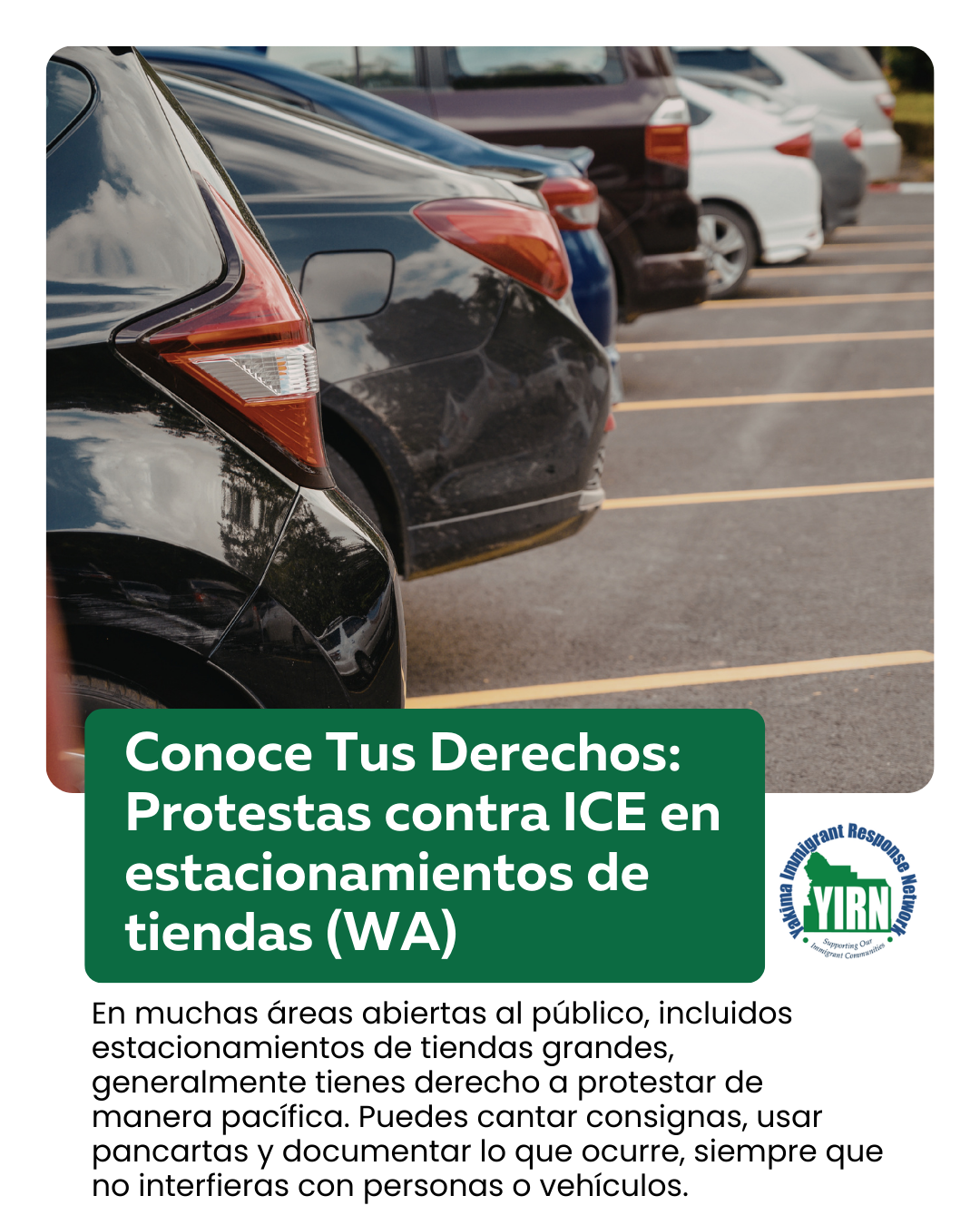
Conoce Tus Derechos: Protestas contra ICE en estacionamientos de tiendas (WA)
En muchas áreas abiertas al público, incluidos estacionamientos de tiendas grandes, generalmente tienes derecho a protestar de manera pacífica. Puedes cantar consignas, usar pancartas y documentar lo que ocurre, siempre que no interfieras con personas o vehículos.
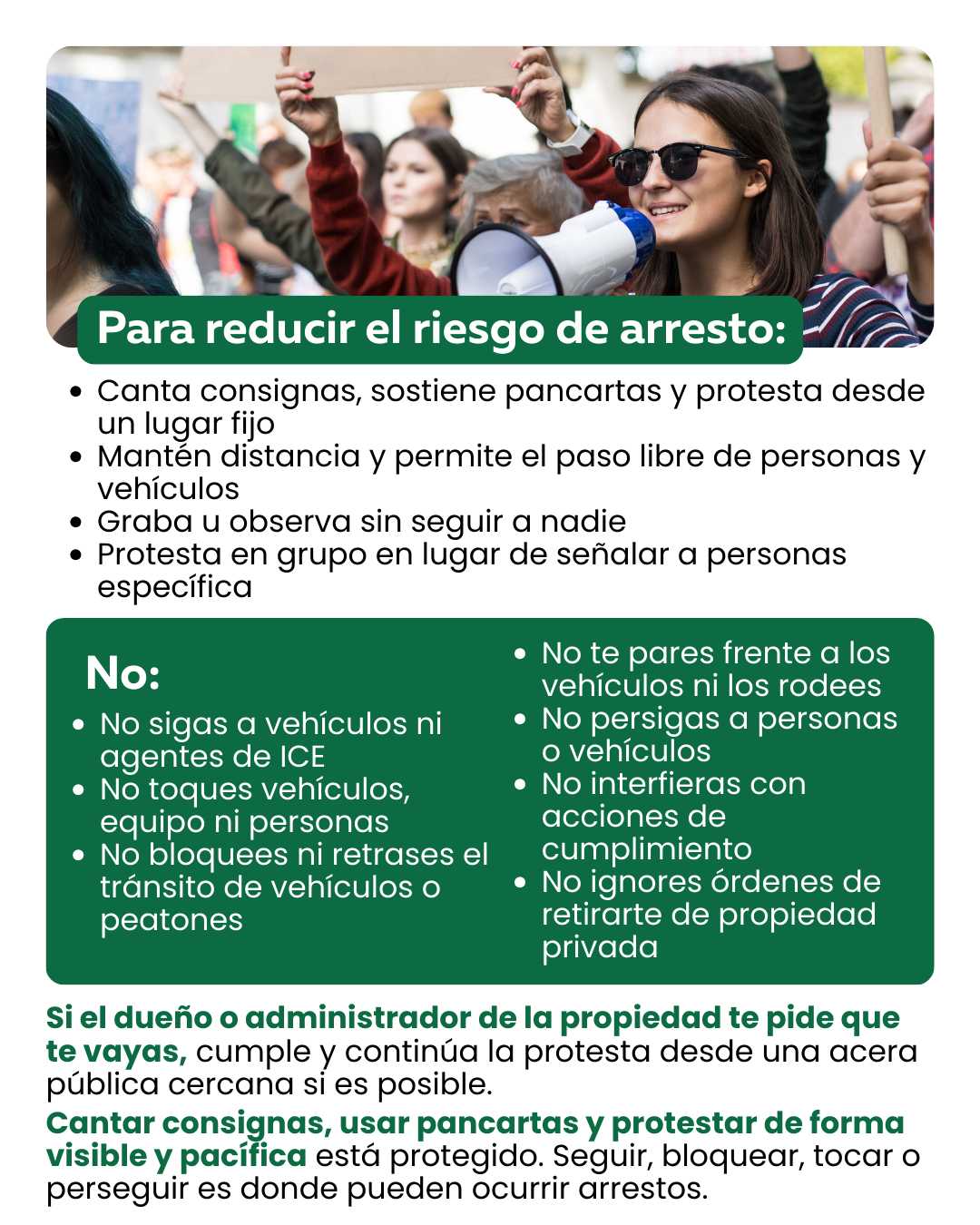
Para reducir el riesgo de arresto:
• Canta consignas, sostiene pancartas y protesta desde un lugar fijo
• Mantén distancia y permite el paso libre de personas y vehículos
• Graba u observa sin seguir a nadie
• Protesta en grupo en lugar de señalar a personas específicas
No:
• No sigas a vehículos ni agentes de ICE
• No toques vehículos, equipo ni personas
• No bloquees ni retrases el tránsito de vehículos o peatones
• No te pares frente a ni rodees vehículos
• No persigas a personas o vehículos
• No interfieras con acciones de cumplimiento
• No ignores órdenes de retirarte de propiedad privada
Si el dueño o administrador de la propiedad te pide que te vayas, cumple y continúa la protesta desde una acera pública cercana si es posible.
Cantar consignas, usar pancartas y protestar de forma visible y pacífica está protegido. Seguir, bloquear, tocar o perseguir es donde pueden ocurrir arrestos.
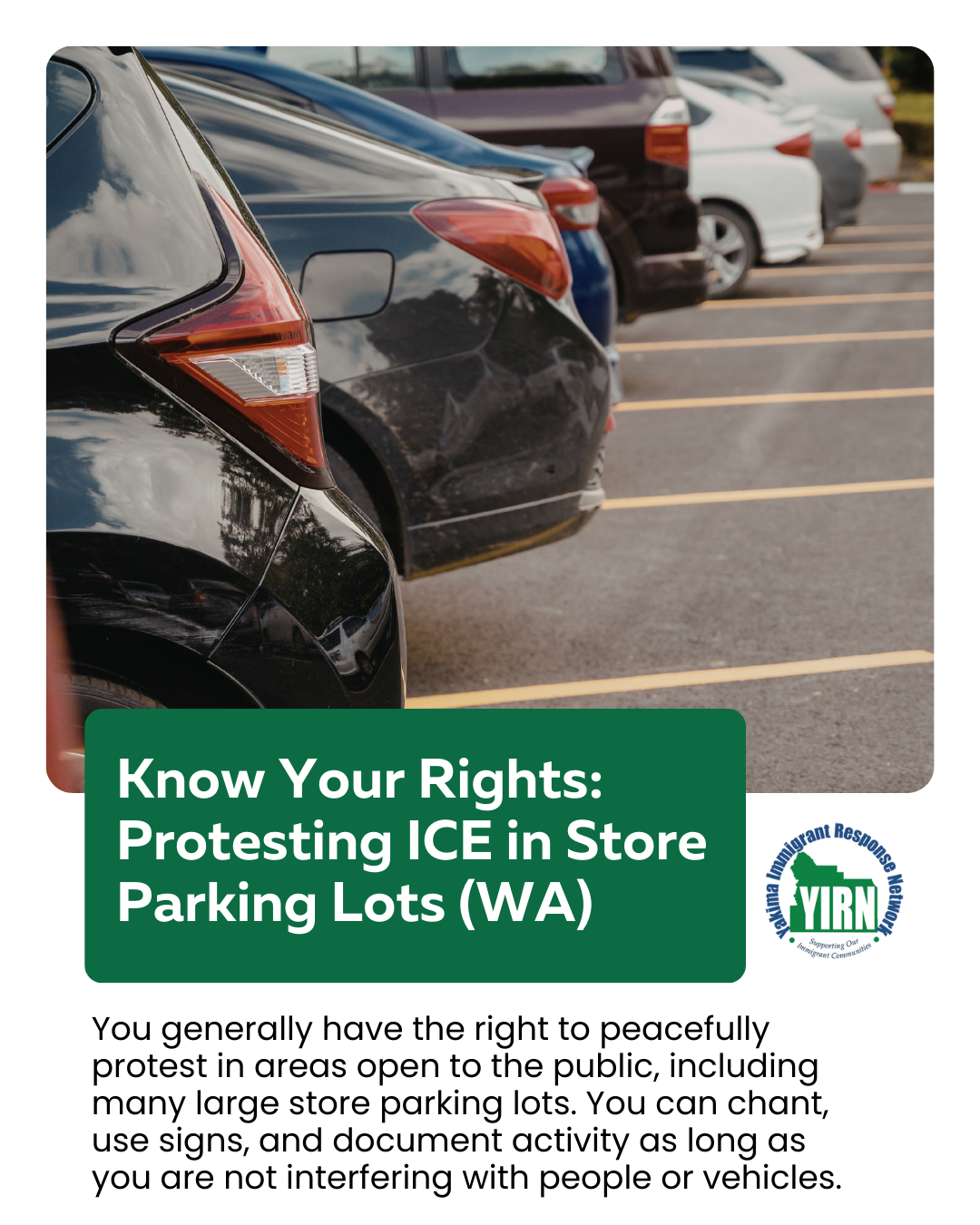
Know Your Rights: Protesting ICE in Store Parking Lots (WA)
You generally have the right to peacefully protest in areas open to the public, including many large store parking lots. You can chant, use signs, and document activity as long as you are not interfering with people or vehicles.
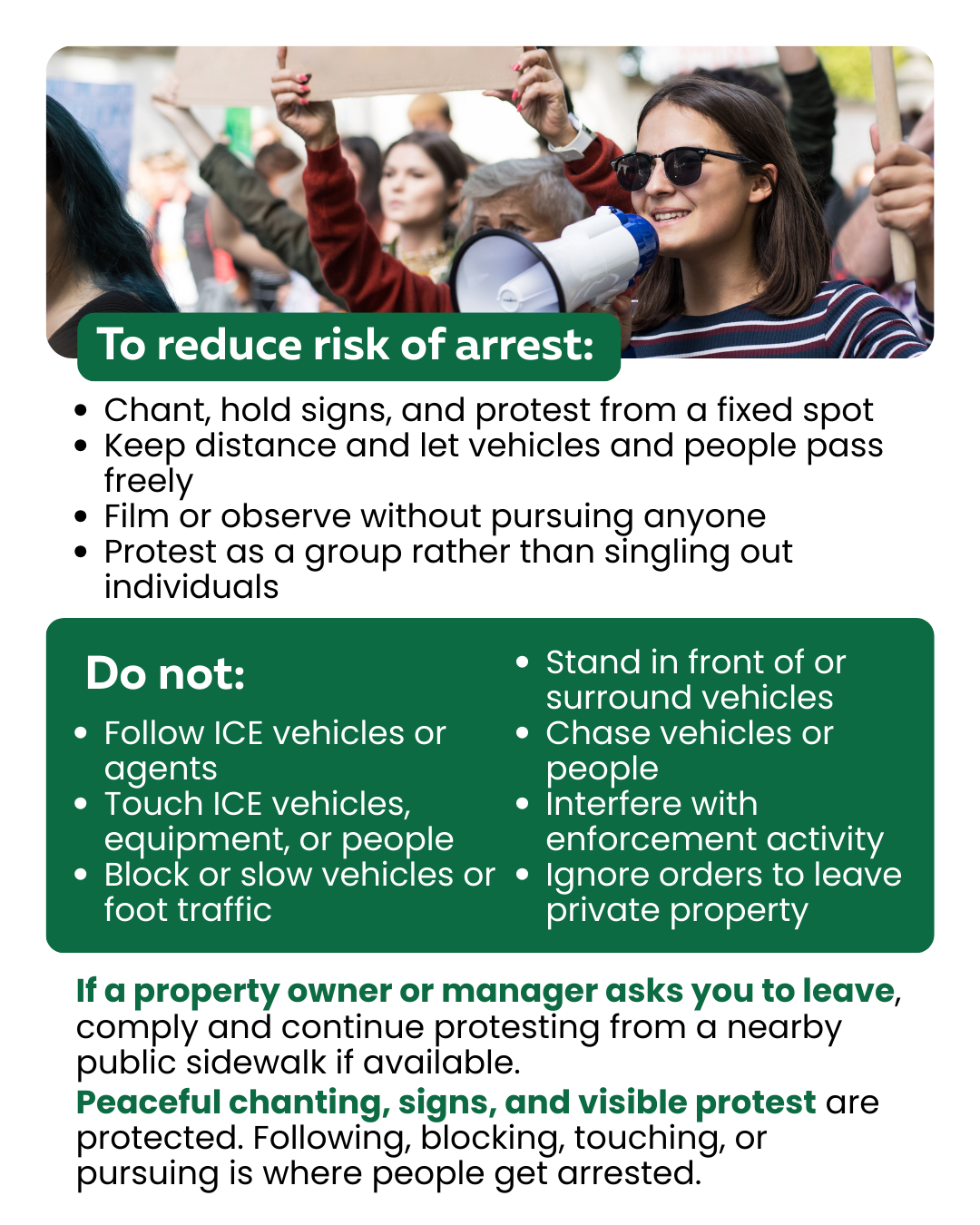
To reduce risk of arrest:
• Chant, hold signs, and protest from a fixed spot
• Keep distance and let vehicles and people pass freely
• Film or observe without pursuing anyone
• Protest as a group rather than singling out individuals
Do not:
• Follow ICE vehicles or agents
• Touch ICE vehicles, equipment, or people
• Block or slow vehicles or foot traffic
• Stand in front of or surround vehicles
• Chase vehicles or people
• Interfere with enforcement activity
• Ignore orders to leave private property
If a property owner or manager asks you to leave, comply and continue protesting from a nearby public sidewalk if available.
Peaceful chanting, signs, and visible protest are protected. Following, blocking, touching, or pursuing is where people get arrested.
