Where we are
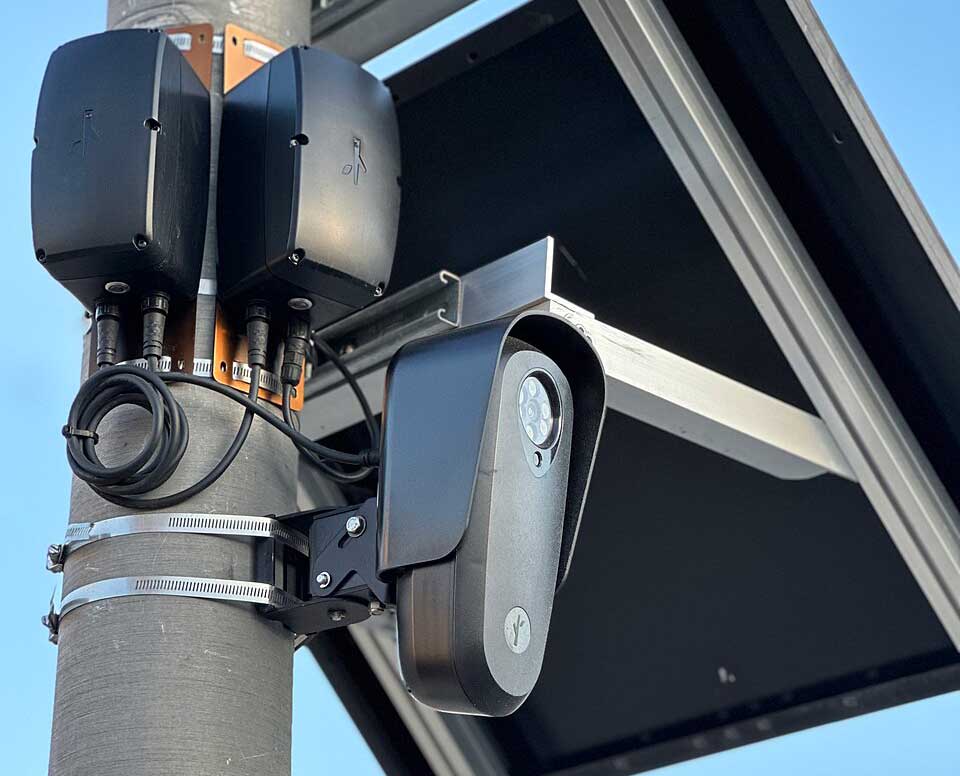
Automated License Plate Readers (ALPRs or LPRs) are AI-powered cameras that capture and analyze images of all passing vehicles, purportedly to assist law enforcement in fighting crime. Flock Safety is a major provider of ALPR technology.
There are currently hundreds of Flock cameras operating in Yakima County on both public and private property. See their location: deflock.org and Eyes On Flock. Roughly half the Flock cameras in Yakima are privately owned. When checked on 8/12/2026 the Yakima Police Department’s Flock Transparency Portal reported 352,288 unique plate reads and 488 user search sessions over the last 30 days.
The Yakima County Sheriff’s Office has a county Flock Transparency page that links to the Flock Transparency Portal. When checked on 8/13/2026 there were 159 cameras, 208,204 unique plate reads and 225 user searches over the last 30 days. The county has reportedly purchased 293 Flock cameras total.
Last legislative session, Washington State passed SB 6002 which outlawed ALPR data sharing outside of state agencies, including ICE. See the Bill Summary or download the Bill as Passed Legislation.
Nevertheless, YIRN’s Rapid Response team regularly observes ICE officers scanning license plate numbers of parked cars into their phones at local big box stores that have private Flock cameras. ICE has access to dozens of surveillance tools, including Flock. Read details in the TechDirt article.
In early February 2026, YIRN partnered with Yakima Valley College to bring Phil Neff from the UW Center for Human Rights to present on Flock Surveillance & Department of Licensing (DOL) Info Sharing. A video of the presentation is available on YIRN’s YouTube channel. A recent update of the UWCHR DOL Sharing report shows that arrests by federal immigration agencies tapping Washington drivers’ data have been steadily climbing. Read “Washington driver data still used in ICE arrests, UW report shows” (Yakima Herald) for details.
Opposition to Flock camera surveillance is growing nationwide across the political spectrum. For example, read: “Flock cameras are taking over, but many Americans are pushing back” on Military.com.
How we got here
On August 19, 2025, the Yakima City Council unanimously authorized an agreement with Flock Safety for annual subscription renewals for the Yakima Police Department, specifically for license plate recognition (LPR) cameras with vehicle fingerprint technology and cloud-based software platform. See the City Council Agenda Packet.
NOTE: Recent Yakima City Council meeting agendas, minutes, and agenda packets are available online. Meeting videos can be found on the City’s YPAC platform.
On January 13, 2026, the Yakima City Council held a study session on topics including a presentation by local law enforcement on ALPR use. See the Agenda (Section 3C).
Gov. Ferguson signed SB 6002, the Driver Privacy Protection Act, into law effective March 30, 2026, regulating Flock cameras. Read the ACLU overview of the law.
On June 16, 2026, the Yakima City Council considered a resolution presented by Police Chief Shawn Boyle to approve renewing annual subscription agreements with Flock Safety for the Yakima PD. Chief Boyle’s contribution to the council’s Agenda Packet relevant to the Flock contract renewal starts at page 127.
Watch a video of the full council meeting.
Many community members spoke in opposition and provided supporting documents for the council’s consideration that were not included in the Agenda Packet.
As quoted from the meeting minutes, with video timestamps added:
“After extensive Council discussion and consideration [beginning 0:54:31], “MOTION: Potrykus moved and Berg seconded to adopt the resolution. The motion failed by a 3-3 roll call vote; with Brown, Gonzales and Roy voting no; Glenn absent.”
Matt Brown then indicated his desire to carefully review the contract language before voting on renewal. [1:10:56]. After further discussion, “MOTION: Potrykus moved and Berg seconded to bring this resolution [Flock contract] back the first week of July. The motion carried with a 5-1 vote; with Gonzalez voting no; Glenn absent.”
Many of the community members who spoke in opposition to Flock then left the meeting room. [1:15:05]
Potrykus later moved under “Other Business” to reconsider the Flock resolution without acknowledging her earlier failure to raise concerns about delay. [1:49:20] The appropriateness of her motion under council rules was discussed. No council members acknowledged the absence of concerned community members.
“MOTION: Brown moved and Roy seconded to reconsider item 7M [related to agreements with Flock Safety]. The motion carried by unanimous vote; with Gonzalez voting no; Glenn absent.”
When the city attorney advised the council that debate on the contract renewal would resume, Brown exclaimed, “We went back in time.” [1:55:01].
“After Council discussion … MOTION: Potrykus moved and Byers seconded to adopt the resolution [Item 7M].
“The motion carried by a 5-1 roll call vote; with Gonzales voting no; Glenn absent.”
What’s next?
YIRN will continue to document ICE enforcement activity in our area and assist impacted community members. Volunteers interested in joining YIRN’s Rapid Response effort can find more information on the YIRN website.
The ACLU has launched a “Get The Flock Out” campaign to fight creepy ALPR cameras, with a toolkit for taking action.
DeFlock announced a National Week of Action Against ALPRs from August 16-22, 2026. You can sign up for updates on DeFlock’s NoALPRs website.
—
The Yakima City Council has shown itself to be dismissive of its residents privacy and unwilling to listen to community concerns. YIRN strongly encourages the Yakima community to hold our elected officials accountable for the ongoing expense, use, and misuse of Flock technology.
Photo attribution – Wikimedia Commons – By Bruxton – Own work, CC0
November 2026 Flock Update
Flock Camera Updates – Good and Bad
Deflock reports that 305 jurisdictions to date have rejected or terminated surveillance camera (“Flock” for shorthand) contracts, sourcing data from the Institute for Justice that is tracking surveillance technology through a Fourth Amendment lens.
Washington jurisdictions restricting surveillance cameras include the City of Renton and City of Cle Elum and recently Yakima.
Flock technology officially deployed in our area includes both automated license plate readers (ALPR) fixed cameras, and automated video analytics systems (AVAS) live cameras. On November 2, 2026, after much public comment and council discussion over several meetings, the Yakima City Council passed a resolution to ban AVAS cameras on city property. The resolution specifically exempts ALPRs as defined by RCW 10.130 and has some exceptions for use of mobile AVAS cameras at special events.
See “Yakima City Council bans live Flock cameras” in the Yakima Herald-Republic. The vote to adopt the resolution was 5-2 with Brown, Gonzales, Potroykus, Roy, and Berg voting in favor, and Byers and Glenn opposed.
NOTE: Council agendas and minutes are available online. Videos of council meetings can also be found on the City of Yakima’s YouTube channel.
ALPRs remain active in Yakima County. YIRN documents license plate numbers of community members taken by ICE and it seems likely that ICE is circumventing Washington State’s legal restrictions on data sharing enacted in 2019 under the Keep Washington Working Act. YIRN continues to share information and concerns with the UW Center for Human Rights. and the Governor’s Office.
On October 13, the UW Center for Human Rights published a new report detailing the Department of Motor Vehicles (DMV) to Department of Homeland Security (DHS) pipeline of vehicle and driver data sharing with federal immigration officials, specifically looking at Washington, Maryland, New York, and Minnesota. As outlined in the report’s recommendations.
“There are four main ways that federal immigration agencies can access DMV data: by directly accessing the DMV databases; by using Nlets to send messages to state DMVs and receive information back; by using private data brokers; by asking collaborating law enforcement agents to look up information for them and share it. Efforts to curtail the use of one pathway will only likely result in the use of another, until a comprehensive approach is taken that tackles all the possible pathways for DMV-to-DHS data sharing. Of the states examined in the report, both Maryland and New York have come closest to achieving this objective by passing the most comprehensive legislation to address the problem.”
The full report is available online.
Report fact sheets are available in English and Spanish:
Deteniendo la Ruta del DMV-a-DHS (Español)
Stopping the DMV-to-DHS Pipeline (English)
Currently, we live under a draconian federal immigration enforcement regime that wants to presume every undocumented community member is deportable and that all immigration law enforcement is above reproach. YIRN can see from our data collection that in Yakima both these presumptions do not hold up.
YIRN is grateful that the Yakima City Council took one step toward reining in surveillance camera technology, and thanks community members for continuing to show up and share their concerns with our elected representatives.