ICE Detention
Immigration proceedings are civil, not criminal, legal proceedings. Our community members are being “detained,” not “incarcerated,” after being booked in at the Northwest Detention Center (NWDC) in Tacoma. This distinction matters. People in immigration detention have a constitutional right to due process, yet immigrants’ rights are less respected than the rights of alleged criminals. Immigrants in detention are not criminals simply because ICE treats them that way.
Persons who are not citizens of the United States may be detained under sections 235(b) and 236(c) of the Immigration and Nationality Act (INA) pending a civil determination of their right to remain in the United States. The Trump administration has taken an increasingly aggressive approach toward harming immigrant communities, including expanding its interpretation of the mandatory detention provisions in the INA. Current administration policy is to subject immigrants living in the United States who might be deportable (legally “seeking admission”) to mandatory detention, meaning they can’t ask to be released on bond regardless of the underlying merits of their situation.
The Supreme Court recently granted review in a case involving Trump’s policy to deny bond hearings to immigrants who entered the United States without inspection and who have been living here, often for decades. There is currently a circuit split among the federal courts of appeals on Trump’s mandatory detention policy, meaning a detainee’s right to a bond hearing in immigration court currently depends on the location of the facility where the person is being detained. As reported in Politico, “More than 460 federal district judges have ruled about 20,000 times against ICE’s effort to mass detain people without the opportunity for release on bond.” Only the Second Circuit and the Fifth Circuit, which includes states where ICE transferred some of our community members, have sided with Trump’s position on mandatory detention. Yakima is in the Ninth Circuit.
This for-profit immigration detention system is, by its nature, rife with abuse. Appalling conditions at an ICE facility in Texas have recently come to light. The ACLU, National Immigration Project, and others are actively challenging the substandard treatment of immigrant detainees around the country.
The Northwest Detention Center is no exception. Substandard living conditions at the NWDC are well documented. DHS contracts with GEO Group to run the NWDC and has instituted new contract provisions specifically meant to thwart state and local oversight and accountability, and to make taxpayers financially liable. These are being challenged in court. Meanwhile, our neighbors are trapped in awful conditions by our own federal government.
Learn more about immigration detention in general at Detention Watch Network.
Getting Out of ICE Detention
The fewer of our community members locked up for no reason, the better! There are a handful ways to get released from ICE detention other than by deportation. (Most of these are beyond the scope of this newsletter.)
- Fight your immigration case while detained and win. This is extraordinarily difficult to do. ICE Air is also making it harder by moving people around. As a consequence, it becomes nearly impossible to meet with an attorney and prepare a case for trial.
- Get conditional release by ICE under Intensive Supervision Appearance Program (ISAP) through the Alternatives to Detention program (ATD)
- This is 24/7 government surveillance using ankle monitors or App check-in requirements as conditions of release.
- The ISAP office in downtown Yakima is in the Sunfair Building at 101 S 3rd Street.
- Pay a bond set by ICE when detained [see below]
- YIRN has seen an recent increase in ICE officers setting bonds for people detained in Yakima County, which is good news!
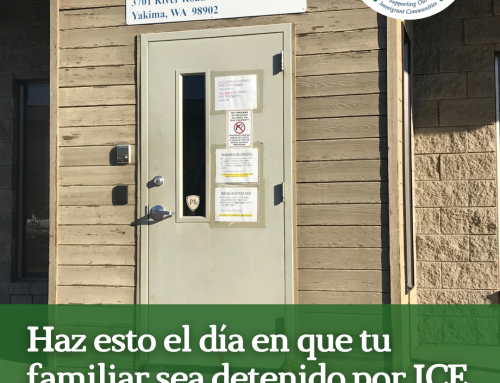
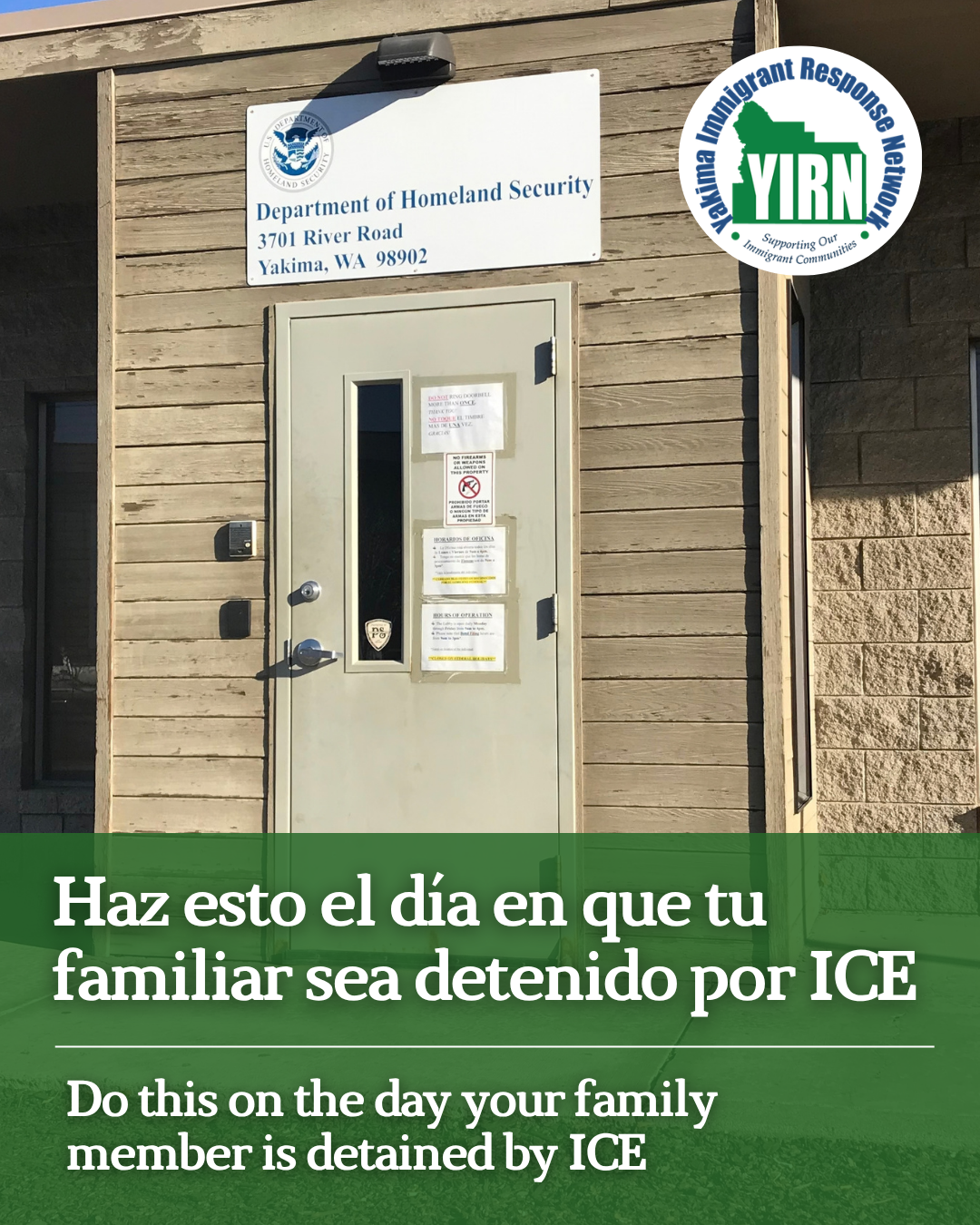
- The ICE Enforcement and Removal office (ERO) in Yakima is at 3701 River Road, near Chesterley Park
- Request a bond hearing in immigration court. Detained individuals not subject to mandatory detention can request a bond hearing before an immigration judge and then prove that they meet the legal criteria for release: that they are not a flight risk and do not pose a danger to the community. See: Bond Quick Start Guide
- File a petition for habeas corpus in federal court. This free online tool is designed to help detainees without a lawyer prepare a habeas petition (also available in Spanish)
- Accept voluntary departure. See: What am I Signing When I Sign My Deportation
ICE Bonds
When ICE detains someone, ICE has the discretion to offer release on bond. Affected community members report that local Yakima ICE officers set the bond amount, typically around $10,000, although the amount varies. ICE in Yakima is refusing to accept bond payments locally. ICE will transfer the detainee to Tacoma to get booked in before the person can get released on bond from Tacoma.
Community partners suggest the following best practices for immigration bonds:
- Pay the bond in person with a certified cashier’s check made out to “Department of Homeland Security”.
- Beware of fraud! You should only pay the bond to a uniformed DHS officer at the Northwest Detention Center in Tacoma.
- The person paying the bond must be an adult US citizen and bring proof of citizenship with the cashier’s check.
- Don’t pay the bond online, even via the ICE online portal. It can take days to process bonds paid online and meanwhile the community member stays detained in Tacoma.
- Carefully read and understand the conditions of the bond. The person released on bond must comply with all the stated release conditions to avoid breach, so the money gets returned when the case is completed.
- Make sure the person paying the money is trustworthy. The person who pays the bond has the rights to the money refunded by DHS in the future, if it is returned. Have a written agreement in place for the return of the money.
YIRN assists immigrant families with resources but doesn’t have the funds to help pay immigration bonds. Contact WAISN’s Fair Fight Bond Fund to apply for bond funds; their processing time is about 2 weeks.
—
Mandatory detention is ripping our community apart and does nothing to make Yakima safer or more secure.
YIRN reminds every eligible voter to vote in the upcoming election! Cast your vote for candidates committed to supporting and uplifting the Yakima community as a whole.
Help YIRN support our neighbors with donations to cover phone and commissary deposits for detainees, so they have resources to communicate with family and for basic needs.